
There’s something interesting happening in the world of watches right now. While brands continue to release new models at a rapid pace, many people are quietly looking in the opposite direction. Vintage watches are becoming more appealing not because they are trendy, but because they often make more sense. They represent a different approach to design, proportion, and value that feels increasingly rare in today’s market.
Modern watch releases tend to focus on novelty. Bigger cases, louder designs, limited editions, and endless collaborations dominate the conversation. It can feel like every new launch is trying to compete for attention rather than simply existing as a well designed object. In contrast, vintage watches were often created with a different mindset. They were tools first, objects meant to be worn daily rather than displayed or collected for speculation.
This difference becomes obvious when you start looking closely at older watches. The proportions feel more natural, the dials are often cleaner, and the designs were built to last decades rather than seasons. Vintage watches carry a sense of restraint that many modern pieces seem to have forgotten.
Another reason vintage watches feel relevant today is their connection to longevity. In an era where people are increasingly thinking about sustainability and thoughtful consumption, giving a second life to well made objects feels meaningful. A vintage watch is not only a functional accessory but also a continuation of a design story that started years ago.
The Appeal of Simplicity
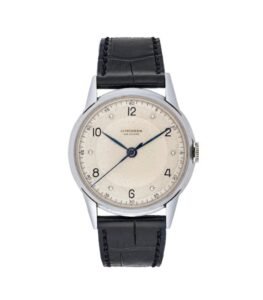
One of the most noticeable qualities of vintage watches is how balanced they feel. Case sizes were typically smaller, proportions were carefully considered, and the overall design rarely tried to overwhelm the wrist. This simplicity is exactly what makes many of them feel modern again today.
Take a time only Longines for example. These watches represent a kind of quiet elegance that is difficult to replicate. The dial is clean, the case proportions are refined, and the design feels timeless without relying on unnecessary decoration. It’s the type of watch that works just as well with tailoring as it does with something as simple as denim and knitwear. There’s a calm confidence to these watches that never asks for attention but always earns it.
View Time-Only Longines here
When Design Becomes Iconic
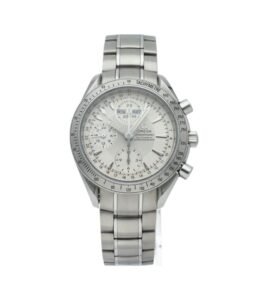
Some vintage watches have earned their place in history because their design solved a real problem. The Omega Speedmaster is one of those watches. Originally created as a tool chronograph, it eventually became one of the most recognizable watches ever made.
What makes vintage Speedmasters so appealing today is their honesty. The design was never meant to be flashy. It was built around functionality, legibility, and durability. Over time those qualities created a watch that feels both technical and timeless. Wearing a vintage Speedmaster doesn’t feel like wearing a luxury object as much as it feels like wearing a piece of design history that still works perfectly in everyday life.
View Omega Speedmaster here
Precision and Character
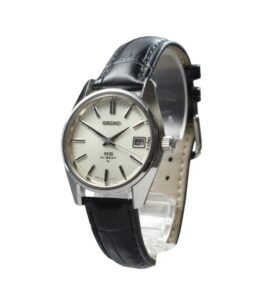
Japanese watchmaking also played an important role in the development of vintage watches that still feel relevant today. The Hi Beat King Seiko is a great example. These watches were developed during a period when Japanese manufacturers were pushing mechanical precision to new levels.
Beyond the technical side, King Seiko models have a distinctive character. The sharp case lines, polished surfaces, and balanced dials create a visual identity that stands out without becoming excessive. There is a sense of precision in both the movement and the design that makes these watches feel incredibly thoughtful. They reflect a moment in watchmaking where innovation and design discipline worked together.
View Hi Beat King Seiko here
Sport Watches With Personality
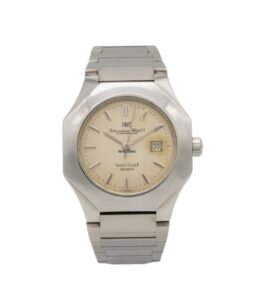
Not every vintage watch needs to be understated to work today. Some of the most interesting pieces come from sportier collections that experimented with shape and presence. The IWC Yacht Club is one of those watches.
Originally designed as a robust sports watch, the Yacht Club combines durability with an unexpectedly elegant design language. The case has weight and presence, but it never feels oversized. The dial remains clean and highly readable, while the overall aesthetic captures a specific era of watch design. It’s the kind of watch that feels distinctive without ever appearing exaggerated.
View IWC Yacht Club here
A Different Way of Thinking About Watches
Looking at these watches together reveals something important about vintage design. None of them were created to chase trends. They were designed to solve practical problems, to be worn daily, and to age gracefully over time. That philosophy is exactly what makes them appealing today.
Vintage watches also encourage a different mindset when it comes to building a collection. Instead of constantly chasing the next release, they invite you to slow down and appreciate objects that already exist. A single watch with a strong design identity can often feel more meaningful than owning several that simply follow current trends.
There is also a deeper satisfaction in knowing that a watch has already lived part of its life before reaching your wrist. Small imperfections, subtle patina, and the story behind the piece all contribute to a sense of authenticity that is difficult to manufacture.
In many ways, vintage watches remind us that good design doesn’t need to be reinvented every year. The best objects are often the ones that remain relevant decades after they were created. They prove that when design is thoughtful, proportionate, and honest, time only makes it better.
This post may contain affiliate links. If you make a purchase through these links, we may earn a commission at no extra cost to you.